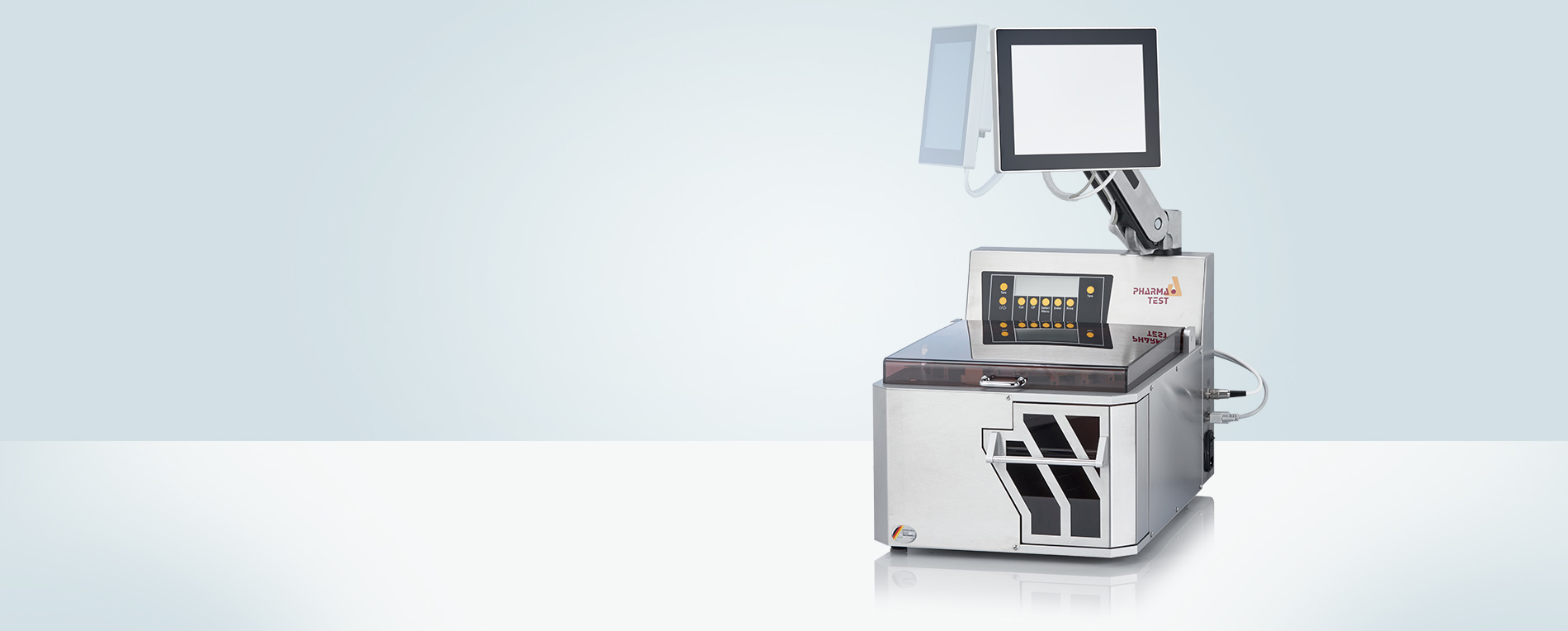
4-in-1 tablet hardness testing with multi-batch feeding option.
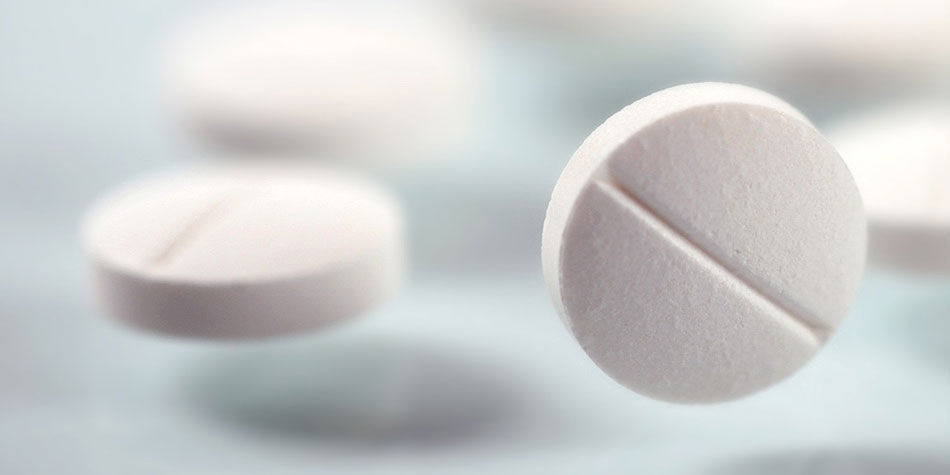
Test weight, thickness (or height), diameter (or length), and hardness of regular tablets, odd shaped tablets (caplets, oblongs etc.) and other solid samples fully automatically. Use the WHT 4 for the fully automated testing of single tablet critical parameters including weight (in compliance to the European and German Pharmacopoeia for uniformity of mass), thickness, diameter and the tablet hardness also according to the European EP [2.9.8] and USP [1217] Pharmacopoeia.
Operating Principle
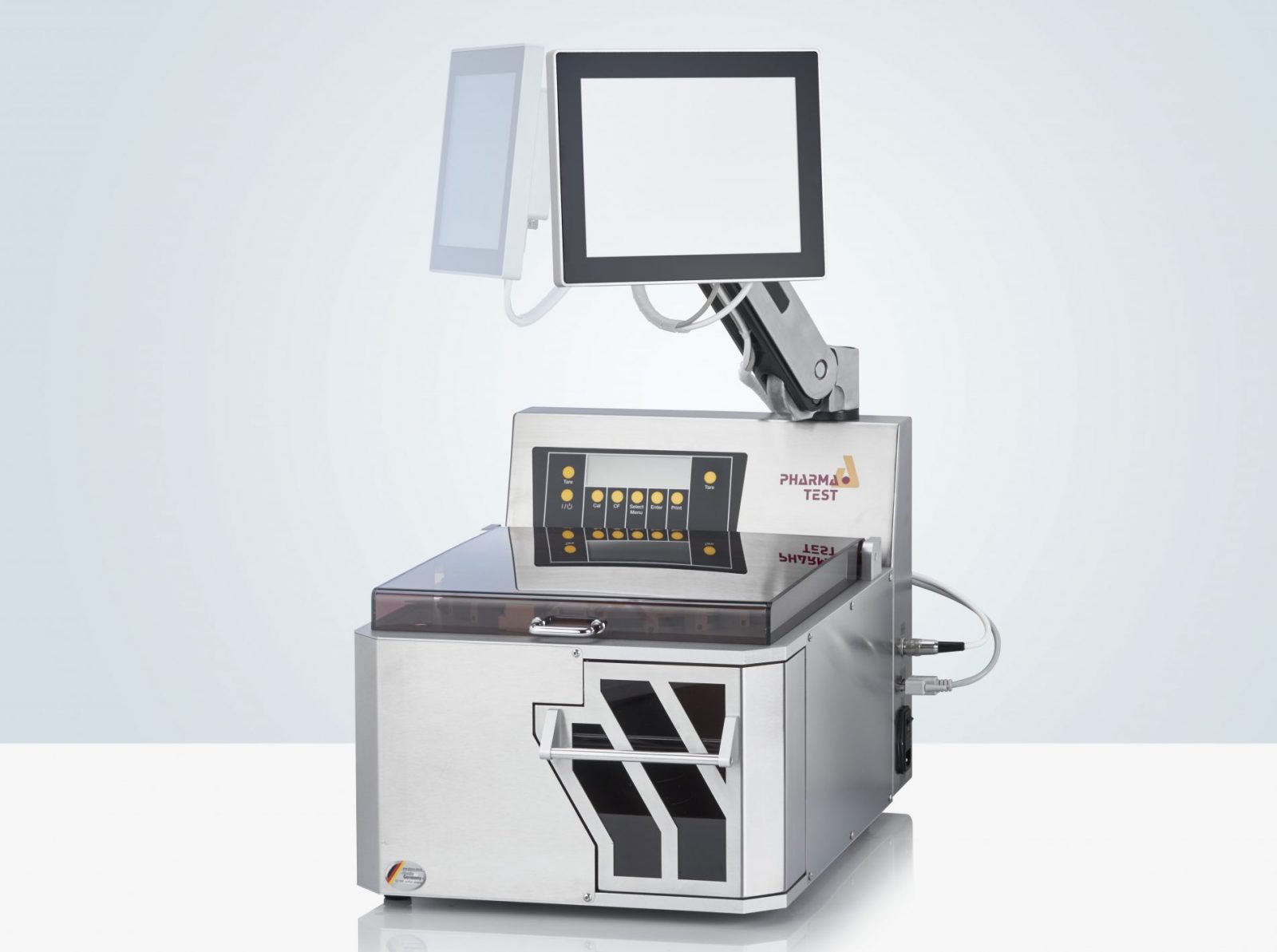
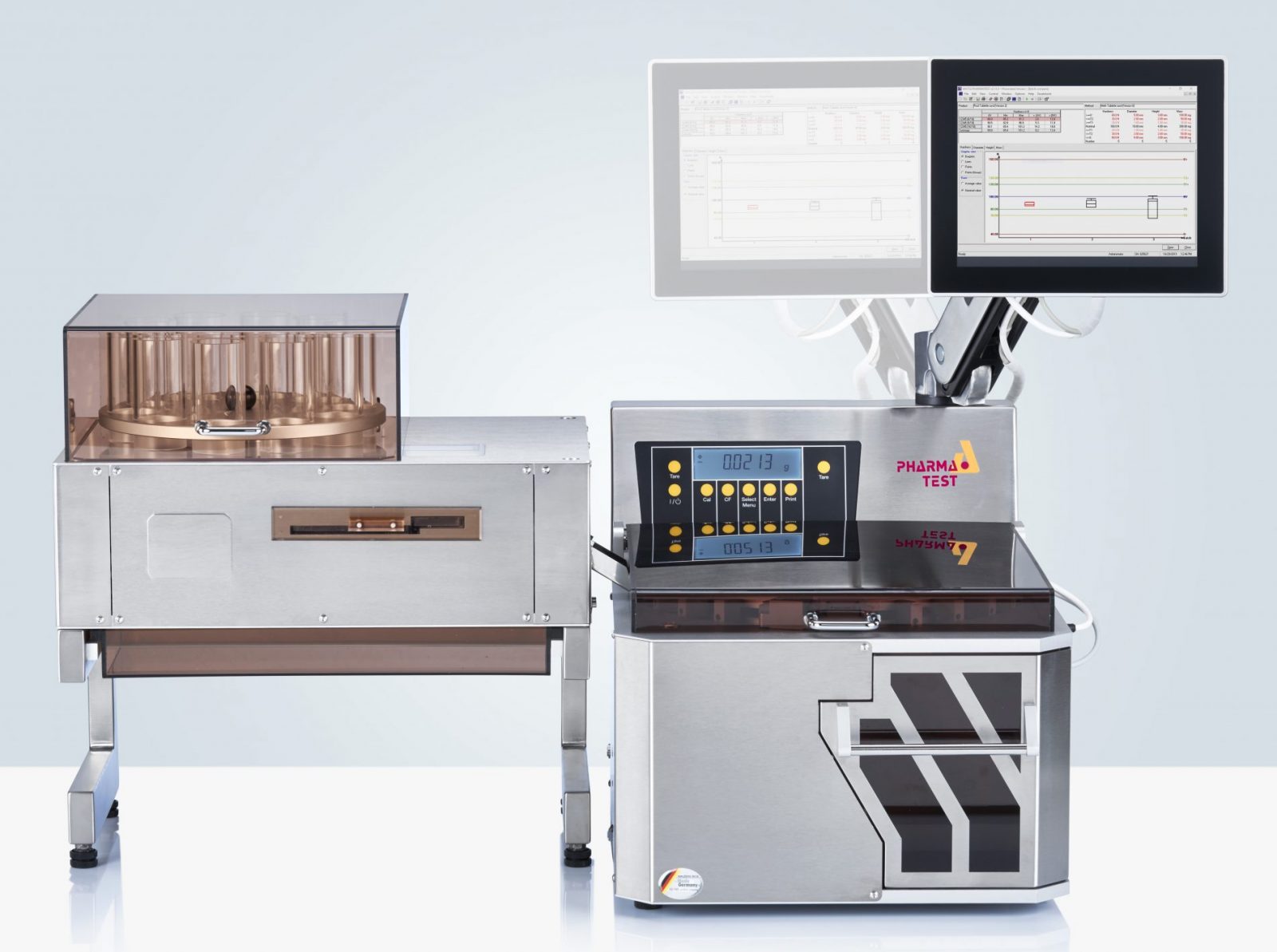
This instrument offers a reliable and reproducible self-contained feeder and measurement station for quality control of samples during tablet production as well as in post-production QC and QA laboratories. The WHT 4 testing system offers four test parameters of the same sample. The instrument is offered as a stand-alone unit including an integrated touch screen PC running the WHT32 software. A single- or multiple-batch feeder may be used to individually file the samples into the testing system for fully automated control of different samples and batches. Using the single feeder WHT 4-SM1 and direct connection to an existing tableting machine is possible. The multiple batch feeder WHT 4-SM is used to test up to 10 different products fully automatically and unattended.
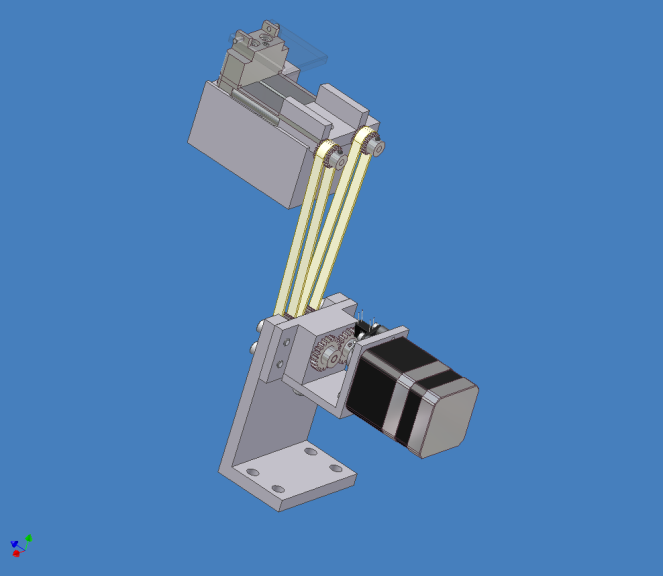
Operating Principle of the Sample Positioning Flaps
Use the WHT 4 for all regular (round) and most odd shaped dosage forms. Its unique orientation "flap" design aligns automatically incorrectly positioned samples into the correct tip-to-tip hardness test position. The schematic on the right side shows the two flaps of the combined hardness and diameter testing station and the drive controlling the flap movement.
Use the single or multiple batch feeder or place up to 20 samples manually into the individual segments of the sample carousel. Select the valid testing program and start the run.
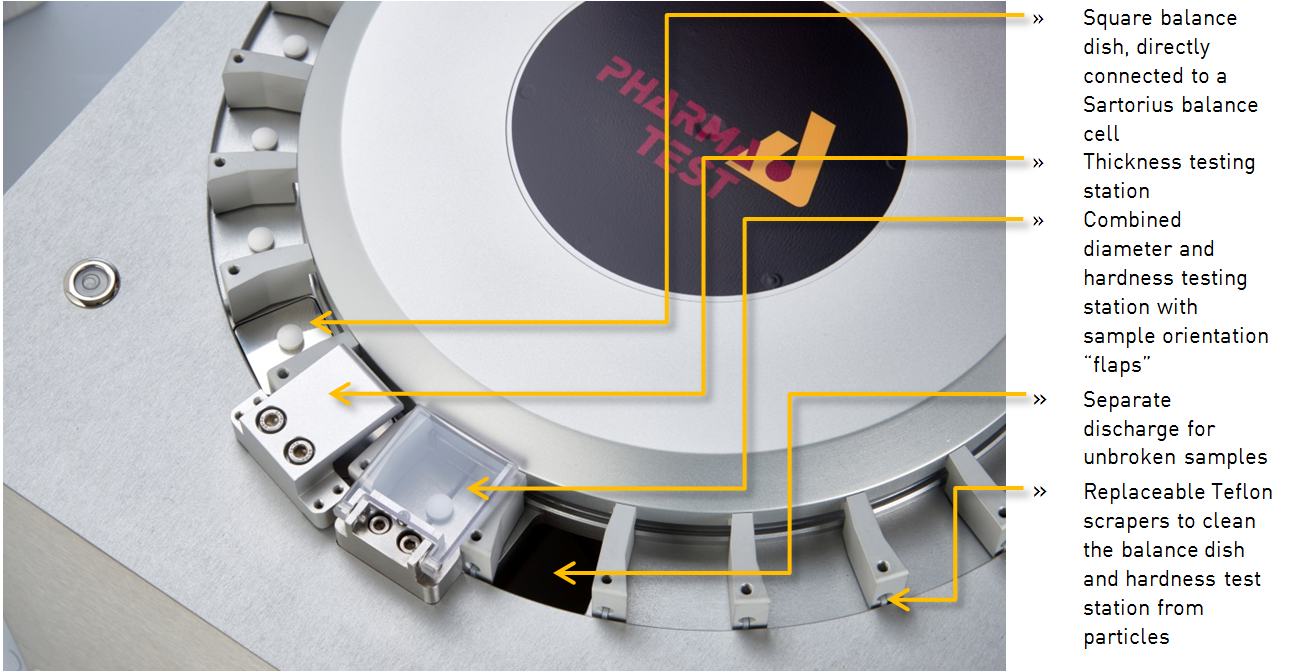
This is a view of the sample carousel and the four testing stations of WHT 4
Operation Principle of the Hardness Measurement
The current monographs of the USP and EP Pharmacopoeia define how a tablet hardness testing instrument should work, but without establishing data of how to increase the applied force and when to detect a sample to be broken. This often causes problems when trying to compare results of the same tablet measured with instruments from different manufacturers. The hardness result is directly influenced by the contact speed and force increase rate of testing instrument. A faster operated test jaw means a lower reproducibility and often higher absolute results. In order to offer the possibility to select an operating mode which will offer you similar results to other instruments you may already use, WHT 4 allows to set the force mode by selecting between linear force increase or linear speed increase and the set the force rate. When the instrument detects that the sample has been touched, it switches to the measuring mode and starts to increase the force applied to the sample.
Which Force Mode to Select?
Since more than 10 years ago all Pharma Test tablet hardness testing instruments offer the possibility to select either linear force or linear speed increase. Linear force increase offers the most accurate control, as the rate of increase is directly controlled by the electronic load cell used to read the force. Also it is quite simple to validate the correct and linear operation, as a tablet with, for example 100N hardness, will be broken within 5 seconds, when 20N/s had been set as force increase rate. Linear speed increase can also be used; here the driving speed of the stepper motor is kept linear. Actually, as long as the touching force is kept low, there is not too much difference in the results between the two modes, but validation of this mode is reasonably difficult and requires specific equipment. In general results obtained with the linear speed increase mode are less reproducible than the ones with linear force increase mode. Therefore Pharma Test recommends using linear force increase. We will continue to offer both modes of operation in order to offer the possibility of comparing results of different instruments by setting the same parameters of operation.
Sample Transportation
For sample transportation a carousel with 20 segments is used. Each of these segments takes one sample. Each segment is equipped with a Teflon scraper to clean the hardness testing jaws from cohesive products and to clean the track of residual particles.
Having a carousel for sample transport, the system can be used without the need of adding a batch feeding system. Simply place one sample into each segment and start the test series. The built-in micro-processor electronics receives the test result from the balance, thickness gauge, load cell and stepper motor and then transfers the information via the RS-232 interface to the WHT32 software program running on the integrated touch screen PC. The PC is connected the main unit by means of an adjustable swivel arm.
Below on the left the sample transportation from the WHT 4-SM multiple batch feeder into WHT 4 is shown and on the right the unique feature of the WHT 4 is the "flap" device. It positions the sample precisely in the combined diameter and hardness test station.
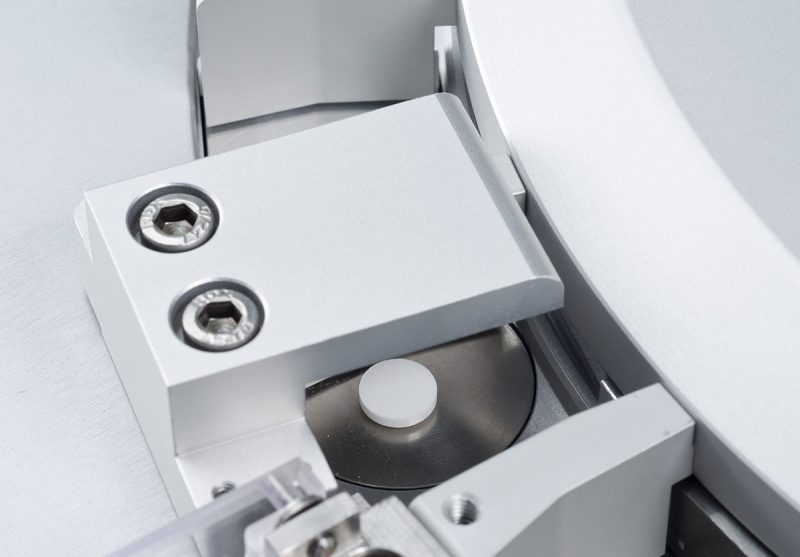
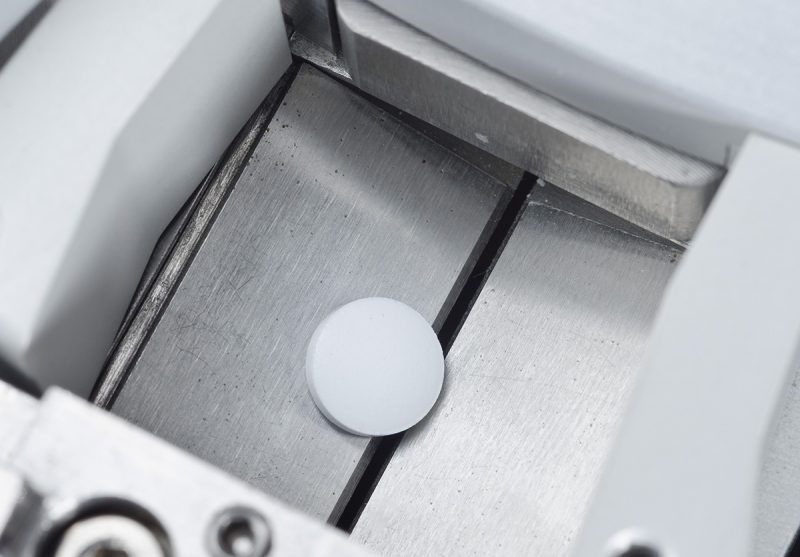
On the left (on top): thickness test station with high precision potentiometer; on the right (at bottom): combined diameter and hardness test station with move-able flaps
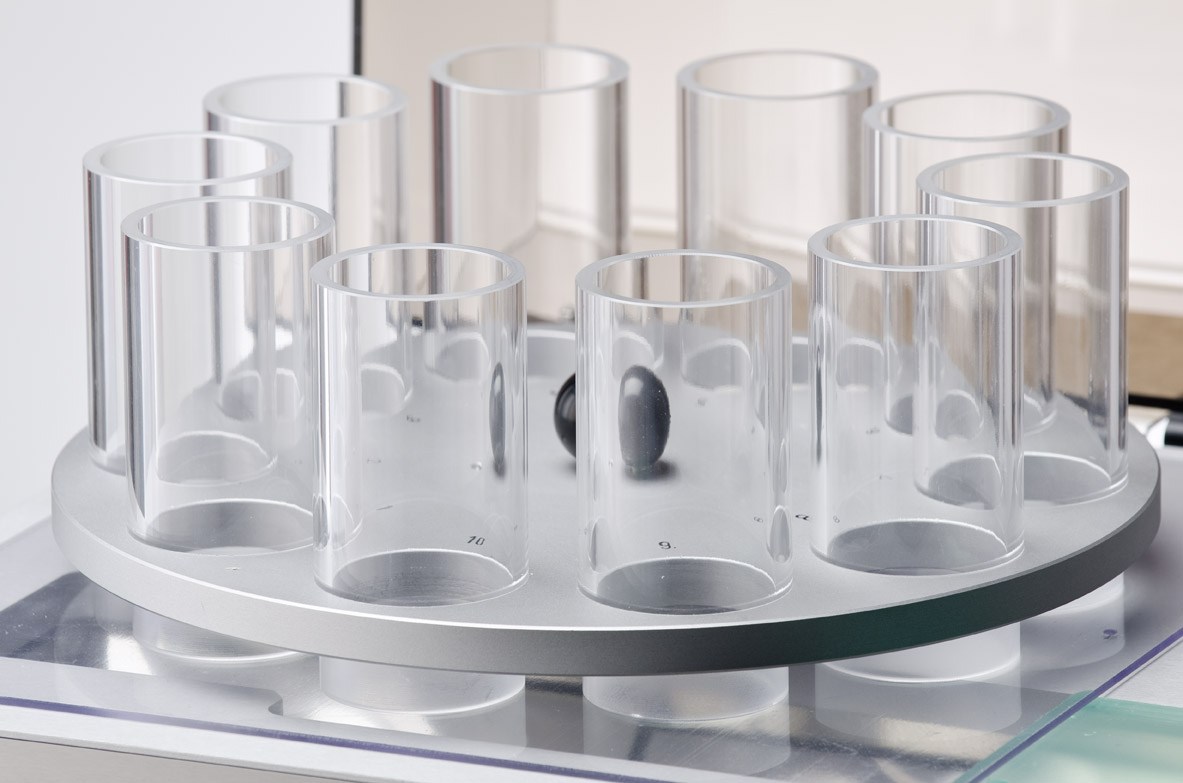
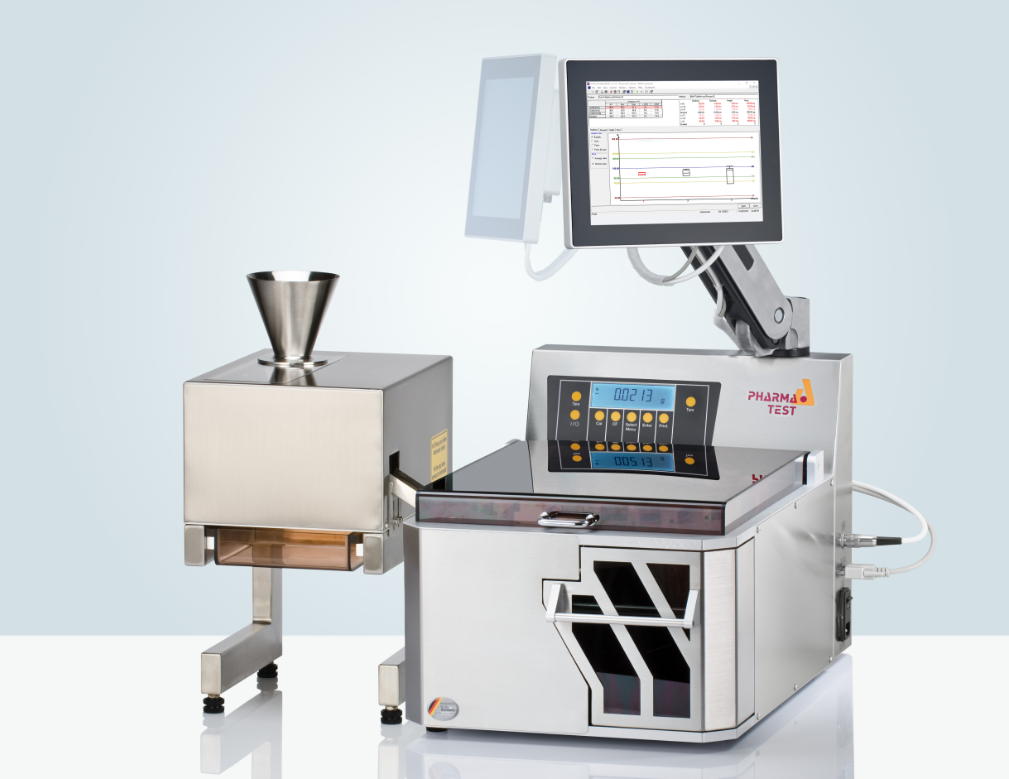
Multi-Batch Feeder WHT 4-SM
To feed and separate samples automatically use the WHT 4-SM multi-batch feeder (shown on the left). The feeder is controlled by the master WHT 4 instrument. The sensor controlled separate vibration tracks are self-adjusted to ensure perfect sample separation and transport. The self-adjustment automatically corrects the vibration speed according to the samples weight, shape and size to minimize waste. The corrected speed is filed for the sample tested and automatically used when this sample is tested the next time.
Single Batch Feeder WHT 4-SM1
The WHT 4-SM multi-batch feeder system supports automated testing of up to ten different products or batches. As soon as all testing parameters for the samples have been entered the testing series can be started. The system operates with a speed of 10 to 15 samples per minute (depending on sample hardness). The WHT 4-SM1 can be used instead of the WHT 4-SM in case a single batch is usually tested. It is also possible to collect samples directly at a tablet press and automatically start a test run when a tablet is detected by the WHT 4 inside the feeder. Unused samples are rejected and pass down a separate collector chute.
WHT32 Software Package
The WHT 4 instrument is controlled by the powerful WHT32 software package. WHT32 is available with full 21 CFR Part 11 compliance and includes a methods and results database, validation and calibration programs for all four testing stations, password administration, freely editable print-outs, statistical calculations and graphical print-outs for the performed test run as well as a batch statistical programs. The software is pre-installed on the integrated PC.
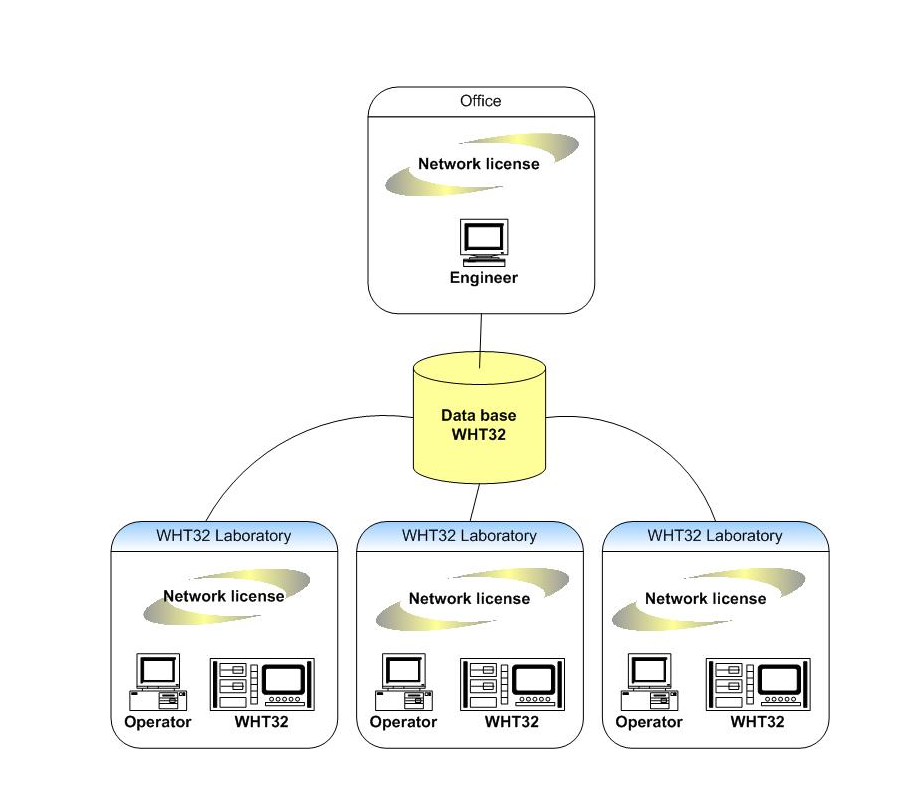
WHT32 offers the possibility to work over a network
Calibration and Adjustment
The current USP Pharmacopeia requires the force sensor of a tablet hardness testing instrument to be calibrated periodically over the complete measuring range (or the range used for measuring samples) with a precision of 1N. All Pharma Test tablet hardness testing instrument can be statically calibrated over the complete measuring range by the use of different traceable counterweights. All instruments support the checking of at least three different points during calibration to prove the linearity of the force sensor.
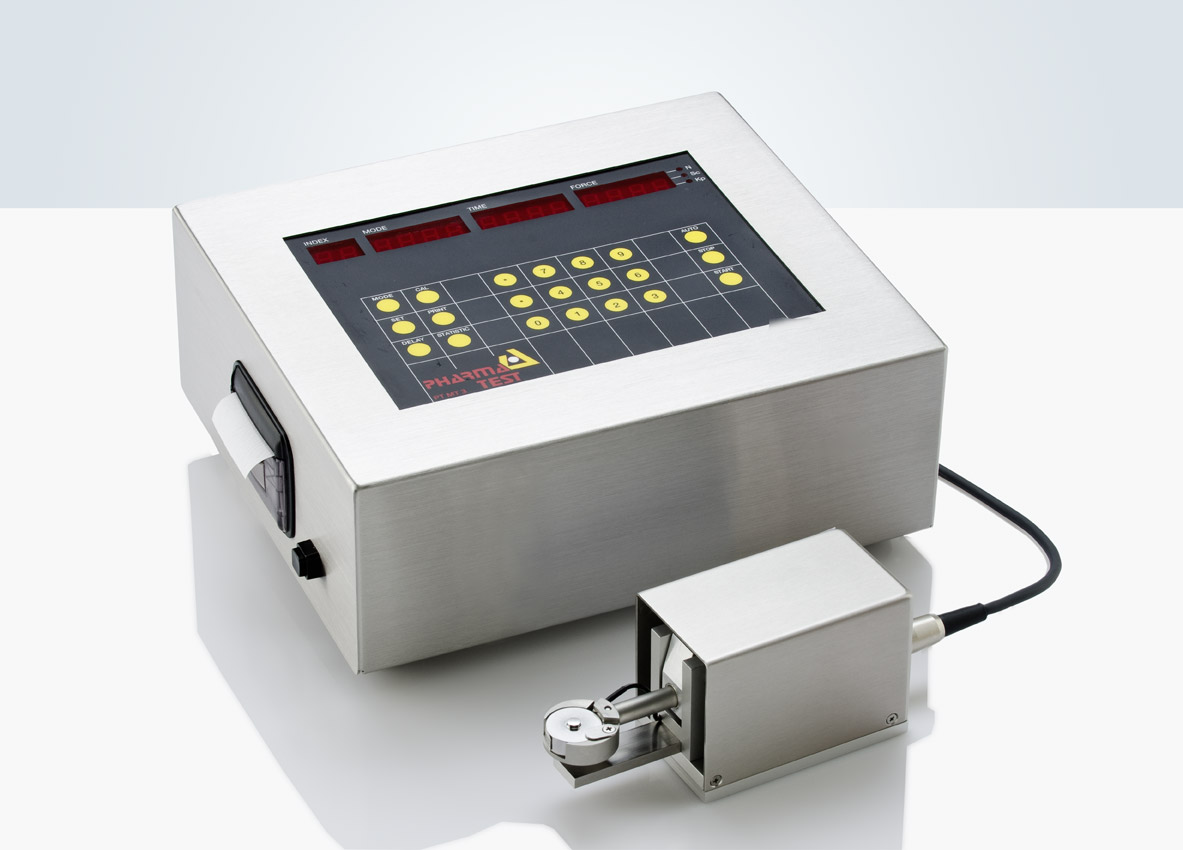
Furthermore, Pharma Test offers the PT-MT3 magnetic tablets to calibrate the breakpoint detection of the whole tablet hardness testing instrument (force sensor and mechanics of the instrument). All Pharma Test tablet hardness testing instruments are fully compliant to the requirements of the current USP Pharmacopeia. WHT32 features an access controlled calibration and adjustment program for the four testing stations.
For the thickness and diameter station, certified reference blocks sets are used for both calibration and adjustment. Weight sets are used to calibrate and adjust the force sensor (load cell) of the instrument over the complete measuring range. For the two point adjustment (zero and reference) of the load cell inside the hardness station a certified reference weight of 10 kg is used. For validation purposes the use 5 up to 50kg certified weights is recommended. The latest calibration and adjustment results are stored on and can be printed and signed. Calibrate the built-in Sartorius balance cell using a 50mg calibrated reference weight.
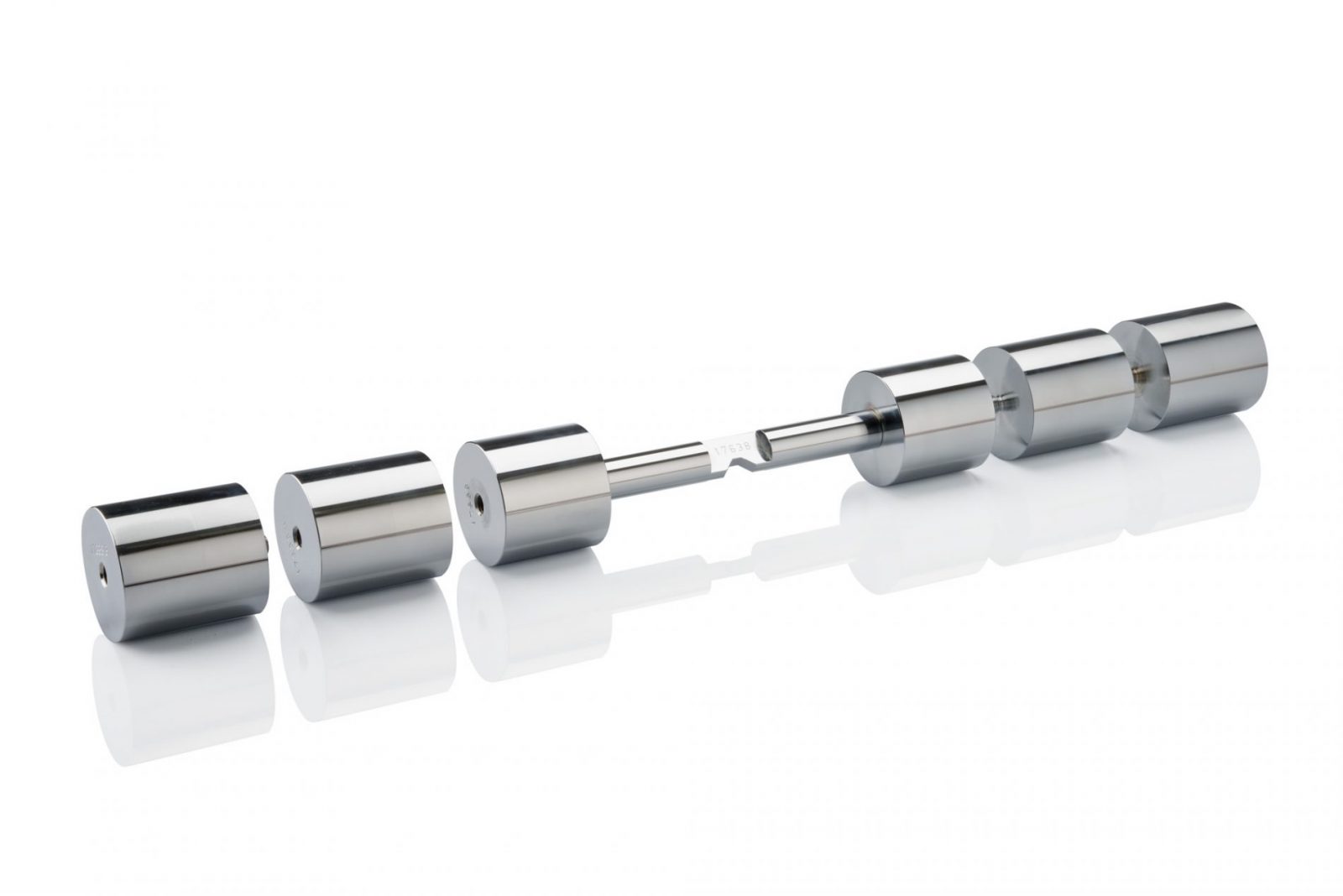
PTB-CAL15 calibration weight set
The main features of the WHT 4 instrument are:
The main features of the WHT32 software package are:
Some of the highlights the WHT 4 instrument offers are
Some of the highlights the WHT32 software package offers are:
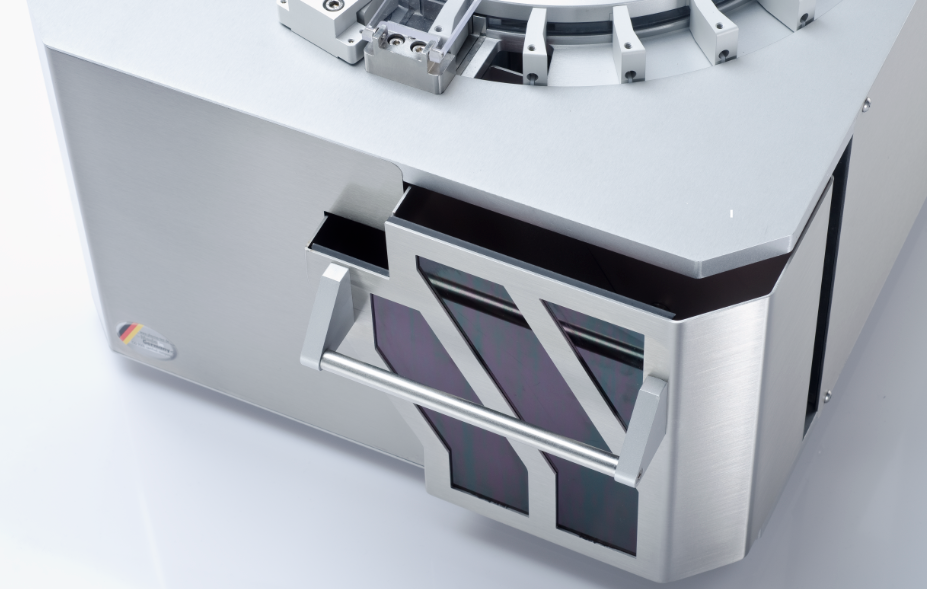
The waste drawer is split in two sections to seperate broken from discarded samples
| Parameter | Specification |
| Number of Testing Stations | 4 (Hardness, Thickness, Diameter and Weight) |
| Hardness Testing Range | 5.0 - 500.0N (optional 2.0 - 300.0N, 5.0 - 1.000N) |
| Hardness Accuracy | Better than 1N |
| Thickness Testing Range | 2.00 - 15.00mm |
| Thickness Accuracy | Better than ± 0.02mm |
| Diameter Testing Range | 2.00 - 30.00mm |
| Diameter Accuracy | Better than ± 0.02mm |
| Weight Measurement | By internal Sartorius balance cell |
| Weight Testing Range | 0.0001g - 50.0000g |
| Weight Accuracy | 0.1mg |
| Force Mode | Selectable between linear force increase and constant speed |
| Force Rate: lin. force | 5 - 250 N/sec. (linear force increase) |
| Force Rate: constant speed | 5 - 250 mm/Min. (constant speed) |
| Industrial PC (IPC) | Integrated high resolution color touch screen PC |
| Sample Handling | Semi- or fully automated using single or multi-batch feeder |
| Testing Speed | 10 to 15 tests per minute depending on sample hardness |
| Flap Control | Flap speed and opening angle steplessly adjustable |
| Number of Tests | Up to 250 tests in one test run |
| Measuring Units | Thickness and diameter selectable between millimeter (mm) and inches (IN)
Hardness selectable between Newton (N), Kilopond (kp) and Strong Cobb (Sc) |
| Calibration Procedure | Using certified 1-30 mm reference blocks, 50g (for balance) and 5 to 50kg (for load cell) reference weights |
| Break Force Validation | Using the PT-MT3 magnetic tablet at 10 to 480N |
| Interfaces | 2x USB, 2x LAN, RS232, DVI, Bluetooth |
| Printer Support | Supports any Windows compatible printer via USB or LAN |
| Instrument Housing | Stainless steel (304) to meet GLP requirements |
| Power | 110/230 Volt, 50/60 Hz |
| Packaging Dimensions | Approx. 90cm x 65cm x 75cm (D x W x H); approx. 118cm x 76cm x 70cm incl. WHT 4-SM |
| Net / Gross Weight | Approx. 45 / 70 kg |
| Net / Gross Weight | Approx. 73 / 105 kg incl. WHT 4-SM |
| Certification | All components certified to USP / EP requirements |
| CE / EMC Certification | All CE / EMC Certification provided |
| Validation | All IQ & OQ documents included |
We reserve the right to make technical changes without any prior notice.
The WHT 4 comes ready to use with the following standard scope of supply:
In addition to the standard scope of supply Pharma Test offers a broad range of accessories and options including: